

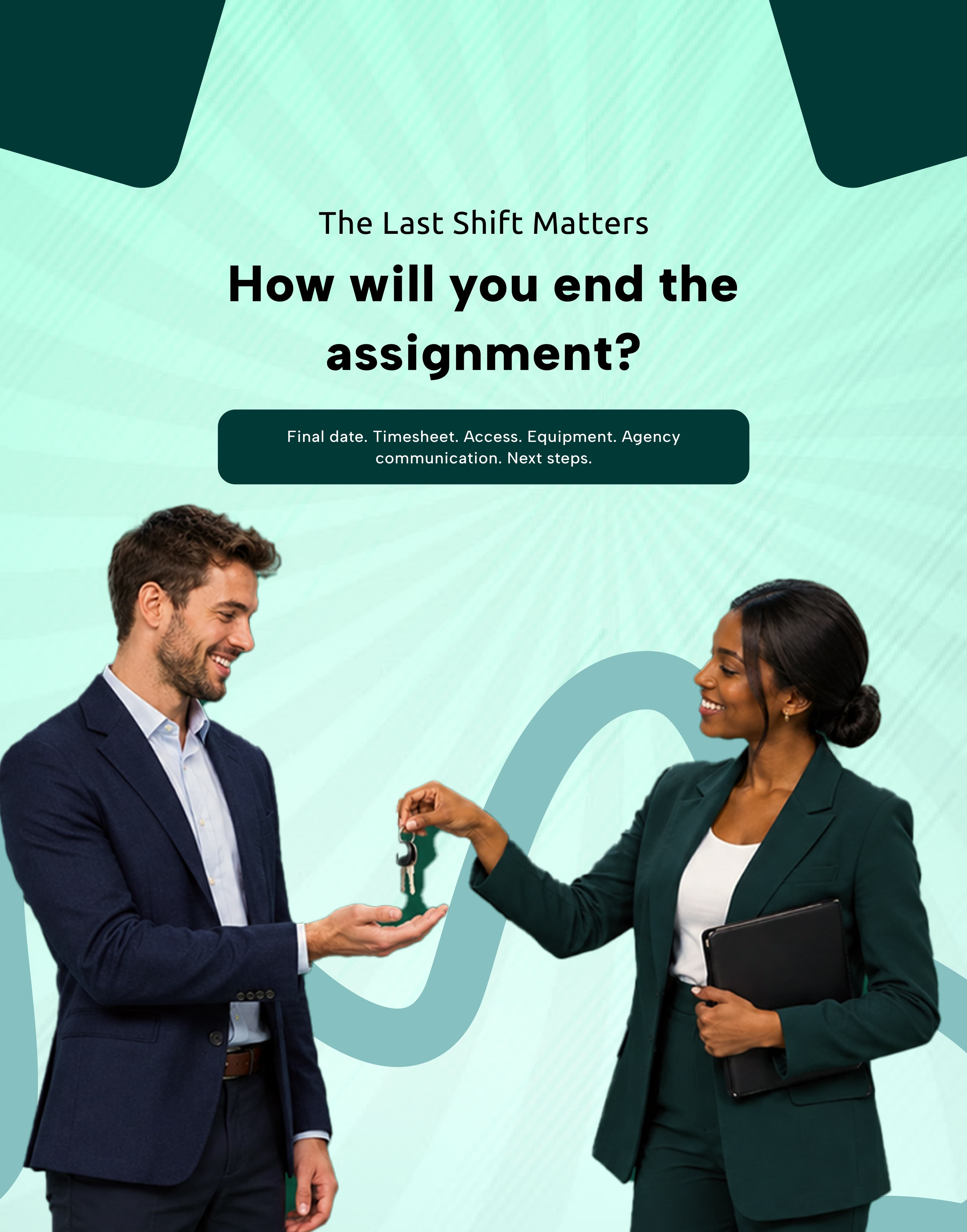
Imagine a temporary worker finishing their final shift at a supermarket in Bristol on a Friday afternoon. They have worked there for several weeks, know the team and understand the routine. At the end of the shift, they hand their staff pass to a supervisor, return a locker key and clock out. Everyone says goodbye, and the worker leaves.
But behind that simple moment are several practical questions. Has the agency been formally told that the assignment has ended? Has the final timesheet been completed and submitted? Does the worker still have access to the staff scheduling system? Has any company equipment been returned? Is the worker expected back next week? If the assignment ended early, has the reason been communicated properly? And if the worker is being considered for another assignment, does anyone know what happens next?
The end of an assignment can look simple from the outside, but responsible workforce management does not end when the worker walks out of the building.
Assignments End for Many Reasons
Temporary assignments can end for many different reasons. The original period may simply have come to an end. A project may have been completed. Seasonal demand may have reduced. The hirer may no longer require additional staff. The worker may move to another assignment. In other cases, the hirer may want to end the assignment earlier than originally expected. Whatever the reason, the end of the assignment should be managed deliberately rather than treated as an administrative afterthought.
Confirm the End Date and Tell the Agency
One of the first things a hirer should establish is exactly when the assignment is ending and whether the agency has been informed. This sounds straightforward, but unclear communication can create problems for everyone involved. The worker may believe they are still scheduled. The agency may continue looking for shifts or making arrangements based on outdated information. The hirer may assume the agency has already handled the matter. When responsibilities are unclear, a simple end date can become a communication problem.
The relationship between the temporary worker, agency and hirer also means that the end of an assignment should not be handled as though the worker simply disappears from the system. Acas guidance explains that an agency worker's assignment can end and that the arrangements for ending an assignment may depend on the contract and the circumstances. The practical lesson for hirers is to understand the terms governing the assignment and communicate changes to the agency rather than making assumptions about what the other party already knows.
Get the Final Hours and Timesheet Right
Pay and timesheets are another important part of the close-out process. A worker's final shift still counts as work, and completing an assignment does not remove the obligation to ensure that hours worked are properly recorded. Government guidance states that agency workers are entitled to the National Minimum Wage for all hours worked, even where those hours have not been recorded on a timesheet. An agency may have reasonable processes for checking hours, but it cannot simply refuse payment because a hirer is unhappy with the worker's performance. This makes accurate communication between the worker, hirer and agency particularly important when an assignment ends.
A professional close-out should therefore include a clear check of the final hours worked, any outstanding timesheet information and any other relevant payroll records. If there is a discrepancy, it should be addressed promptly rather than left for the worker to discover later. From a hirer's perspective, this is not simply about administrative accuracy. It is part of maintaining a professional relationship with both the temporary worker and the agency supplying the service. Our guide to reducing timesheet disputes for hirers covers this in more detail.
Recover Company Property and Remove Access
Then there is the practical question of company property and access. A temporary worker may have been given a security badge, locker key, uniform, laptop, mobile device, access card, parking permit or other equipment during their assignment. They may also have access to digital systems that they no longer need once their work has ended. A proper close-out should consider what needs to be returned, what access needs to be removed and which records need to be retained. This is particularly important where workers have had access to personal information, customer records, internal systems or operational data. For more on this, see temporary workers, personal data and hirer responsibility.
The same principle applies to physical access. A worker who no longer has an active assignment should not inadvertently remain on a rota, receive workplace communications intended for current staff or retain access to areas and systems they no longer need. The end of an assignment is therefore an appropriate point to review both physical and digital access rather than assuming that someone else's system will automatically remove everything.
Extended or Changed? Make It Official
The hirer should also think about what happens if the assignment is being extended or changed rather than genuinely ending. For example, a temporary worker may have originally been recruited for eight weeks, but the supermarket may suddenly need additional staff for another month. That change should not be left as an informal conversation between the worker and a supervisor. The relevant parties should understand the new arrangement, including the expected duration and any changes to the work. Government guidance on agency work places importance on clear assignment information, including the start date, expected duration, type of work, location and hours. We cover this in more depth in The Assignment Changed. Did Your Temporary Workers Know?
Why the 12-Week Point Matters
The 12-week point can also make assignment management particularly important. Under the Agency Workers Regulations, agency workers generally gain additional equal-treatment rights after completing a 12-week qualifying period in the same role with the same hirer. The regulations also provide day-one rights, including access to shared facilities and information about relevant job vacancies. This means that hirers and agencies should maintain accurate records of assignments and communicate changes rather than treating temporary placements as informal arrangements that can be allowed to drift. Read more about how 12 weeks can change an agency worker's rights.
The Human Side of Ending an Assignment
There is also a human side to ending an assignment. A worker may have spent weeks or months contributing to the organisation. They may have worked early mornings, covered unpopular shifts, supported colleagues during busy periods or helped the hirer meet an unexpected demand. Even when the assignment is temporary, the worker's experience of how the organisation communicates its ending can influence how they view the hirer, the agency and future opportunities.
A professional ending does not necessarily require a lengthy meeting. Sometimes it simply means telling the worker clearly that the assignment is ending, confirming the final date, explaining whether there are any further steps and making sure they know who to contact if they have questions about pay, documentation or future work. If the assignment is ending because of concerns about performance or conduct, the appropriate contractual and agency processes should be followed rather than leaving the worker uncertain about what happened.
This becomes even more important where the assignment ends earlier than expected. A worker who believes they are scheduled for another week should not discover at the start of their next shift that they are no longer required. Clear communication gives the worker and agency an opportunity to understand what has changed and to make appropriate arrangements. It also helps the hirer maintain a more accurate workforce record. (If you are a worker, see our guide on what to know when a temporary assignment ends.)
A Simple Close-Out Checklist for Hirers
For hirers, a useful close-out process can be as simple as asking a few questions:
- Has the final date been confirmed?
- Has the agency been informed?
- Have all hours been recorded?
- Has company property been returned?
- Has physical and digital access been reviewed?
- Are the relevant records complete?
- Does the worker need information about what happens next?
These questions take little time, but they can prevent avoidable confusion after the worker has left.
A Beginning, a Middle and an End
The final shift is therefore not just the point at which someone stops working. It is the final stage of the assignment lifecycle. Recruitment brought the worker into the organisation. Induction helped them understand the workplace. Ongoing communication supported the assignment. The close-out completes that process.
Responsible staffing should have a beginning, a middle and an end.
At Meet Resources, we believe that a professional assignment deserves a professional ending. That means clear communication between the worker, agency and hirer, accurate workforce records and practical attention to what happens after the final shift. Because the way an assignment ends is still part of the workforce experience.
The last shift matters. Make sure it is handled properly.
References
- Acas: Your employment rights from the start, agency workers
- Acas: Your employment rights after 12 weeks, agency workers
- GOV.UK: Employment agencies and businesses, before placing a worker with a hirer
- GOV.UK: The Conduct Regulations, Regulation 21 (web version)
- GOV.UK: PAYE and payroll for employers, keeping records
- GOV.UK: Your rights as an agency worker, pay
- HSE: Provide information, training and supervision