

Workforce readiness is not a one-time achievement. A worker may complete an induction, demonstrate the required skills and start an assignment fully prepared, but the demands of work rarely stay the same. New equipment arrives, procedures change, technology reshapes daily tasks, and workers move into roles that need different knowledge or experience. For staffing agencies, preparing workers for assignments has to go beyond checking that they completed the necessary training before day one.
Continuous learning offers a practical way to keep workforce capabilities in line with changing assignment requirements. It means giving workers opportunities to refresh their knowledge, develop new skills, learn from experience and get support as their responsibilities evolve. That does not have to mean frequent formal courses. It can include short refresher sessions, practical demonstrations, coaching, workplace feedback, digital learning and learning from experienced colleagues.
The CIPD's guide to learning and development stresses that learning is only effective when it is aligned with an organisation's wider goals and direction. For staffing agencies, that alignment matters even more, because agency workers may move between different hirers, assignments and working environments. A continuous learning approach helps agencies and hirers think not only about whether workers are ready today, but about how they stay capable and adaptable throughout their working journey.
Why workforce readiness needs ongoing attention
Workforce readiness is often understood as having the right qualifications, experience and skills for a particular job. Those are essential, but readiness also depends on whether workers understand the expectations of their current assignment, can apply their knowledge in practice and know how to respond when circumstances change.
The Health and Safety Executive's explanation of competence describes it as a combination of training, skills, experience and knowledge, together with the ability to apply them safely, and says the level of competence needed should reflect the job and workplace. Readiness, in other words, is not a certificate or a completed checklist. It is the ability to do the work safely and effectively in the relevant setting. We explore that distinction in Completion Is Not Competence.
A worker who has completed a general warehouse induction may be ready for routine duties at one facility. If they are later assigned to a site with different equipment, processes or hazards, they may need further preparation. Likewise, a temporary administrator experienced with one digital system may need guidance when placed with an organisation that uses a different platform.
Continuous learning helps address these changes before they become performance concerns. It lets agencies and hirers spot when workers need extra instruction, practical experience or updated information to stay prepared.
1. Move beyond induction
Induction is an essential part of preparing workers for a new assignment. It introduces workplace expectations, policies, procedures, responsibilities and key safety information. But it should be seen as the beginning of workforce development, not the end.
Workers rarely retain every detail of an induction, especially when a lot of information arrives in a short time. Some procedures only make sense once workers start doing the job, and other learning needs appear when they meet unfamiliar situations.
The HSE's guidance on information, instruction, training and supervision advises employers to assess what information, instruction and training each worker needs and to have it in place when they start work, alongside adequate supervision and checks that workers have understood what they were told. Although the guidance is written with migrant workers in mind, its practical principles apply to making any workplace learning understandable and effective.
For staffing agencies, a worker's development should not stop once the initial compliance requirements are met. Follow-up conversations, assignment-specific briefings and refresher learning help reinforce important information and show where more support is needed. Our article on what happens after the placement looks at why that follow-up matters.
Workers who receive ongoing guidance have more chances to clarify expectations and build confidence as they settle into a workplace.
2. Respond to changing skills requirements
The skills many workplaces need keep evolving. Changes in technology, processes, customer expectations and business priorities all affect what workers need to know and be able to do.
The CIPD's guide to skills matching offers advice on assessing skills, planning skills development and deploying people effectively. CIPD research on skills mismatches describes situations where people either lack key skills their job requires or have skills that are not being used, both of which hold back individual and organisational performance.
For staffing agencies, this is an opportunity to make continuous learning part of workforce planning. Rather than waiting for a hirer to report a performance concern, agencies can review assignment requirements, worker experience and feedback to spot development needs earlier. Our guide to using training data to close skills gaps shows how.
Consider an agency supplying workers to a manufacturer that introduces a new production system. Existing workers may understand the general process but need extra instruction to use the new system correctly. By working with the hirer to identify the required capabilities and arrange suitable learning, the agency helps workers prepare for the change rather than react to it.
Continuous learning is not only about fixing existing skills gaps. It also prepares workers for new responsibilities and helps agencies maintain a more adaptable talent pool.
3. Support safety and competence throughout assignments
Workplace safety is one of the clearest reasons for continuous learning. Risks differ between assignments, and workers can meet unfamiliar equipment, procedures or conditions even when they have experience in a similar role.
The HSE's guidance on the roles of suppliers and end-user businesses explains that labour suppliers and the businesses using agency workers both have responsibilities for protecting them. It emphasises communication before work begins, including sharing information about duties, required skills, experience, qualifications and workplace risks.
That makes collaboration essential. Agencies need to understand the assignment and give workers relevant information before placement. Hirers, who usually direct the day-to-day work and control the workplace, need to make sure workers receive appropriate site-specific instruction and support. Our article on who is responsible for what sets out how those roles fit together, and The Assignment Changed: Did Your Temporary Workers Know? covers what to do when duties shift mid-assignment.
Continuous learning reinforces safety through refresher briefings, toolbox talks, practical demonstrations and supervisor feedback. Where a worker is assigned to unfamiliar equipment or a higher-risk activity, the right training and assessment should be provided before they start the task.
The aim is not to repeat training unnecessarily, but to keep workers prepared for the work they are actually expected to do.
4. Make learning practical and accessible
Continuous learning works best when workers can access it and apply it to their responsibilities. A programme built entirely on long classroom sessions can be hard to fit around changing shifts, multiple assignments or short gaps between placements.
The CIPD's factsheet on methods of delivering learning interventions looks at the factors to weigh when choosing learning methods, the range of options from on-the-job training to formal qualifications, and the value of blended approaches.
For agency workers, a blended approach can be especially effective. Short digital modules provide background knowledge, while practical demonstrations and supervised experience help workers apply it. Brief refreshers reinforce key procedures, and supervisor feedback shows where further development is needed.
For example, an agency worker starting a customer-facing role might complete a short online module on customer service expectations before the assignment begins. During their first few shifts, a supervisor could give feedback on communication, handling enquiries and following the hirer's procedures. If more support is needed, the worker could receive targeted coaching rather than repeating an entire induction.
Learning should also be accessible to workers with different language, literacy, disability and technology needs. Clear instructions, suitable formats and reasonable adjustments help make sure training is understood and that every worker has a fair chance to develop. Our guide to making training accessible to a diverse agency workforce covers this in detail.
5. Use feedback to improve workforce readiness
Continuous learning should be shaped by what happens in the workplace. Training is more effective when agencies know whether workers are applying what they learned and whether the content still fits assignment requirements.
The CIPD's factsheet on learning evaluation, impact and transfer explains that evaluation should be linked to identified performance gaps and organisational objectives, and should consider whether learning is transferred into everyday practice.
Agencies can draw on worker feedback, hirer observations, assessment results and recurring performance concerns to set development priorities. If several workers struggle with the same task, that may point to a wider training need rather than an individual issue.
Feedback should be constructive and timely. Workers need to know what they are doing well, where they need to improve and what support is available. Hirers should also flag changes in assignment requirements so agencies can update learning and preparation.
Treating feedback as a source of learning, rather than just a performance record, makes workforce development far more responsive.
6. Make continuous learning part of your staffing strategy
Continuous learning should not be an isolated activity owned only by a training or compliance team. It supports wider staffing goals, including workforce readiness, assignment matching, worker retention and a reliable talent pool.
The CIPD's Resourcing and Talent Planning 2026 report found that 48% of UK employers surveyed had stepped up efforts to develop talent in-house over the previous year. Among employers that introduced retention initiatives, 45% said they had increased learning and development opportunities. The findings cover employers generally rather than staffing agencies specifically, but they show how much attention organisations are giving to developing their people.
For staffing agencies, continuous learning can connect recruitment, placement and development more closely. Information gathered during recruitment identifies existing capabilities. Assignment feedback highlights new learning needs. Training records support preparation for future opportunities, and ongoing development helps workers build skills that open up a wider range of assignments. For workers, it is also part of building a career, as we discuss in why CPD matters for temporary workers.
This takes realistic planning. Agencies should decide which learning they can provide directly, which needs the hirer's involvement and how workers can access development without unnecessary barriers. The focus should be on relevant, proportionate learning that supports both worker capability and assignment requirements.
Readiness is an ongoing process
Workforce readiness should not be measured only at the moment a worker starts an assignment. As roles, technology and workplace expectations change, workers need opportunities to refresh their knowledge, strengthen their skills and get support in applying what they have learned.
Continuous learning helps staffing agencies move beyond one-off inductions towards a more responsive approach to workforce development. It helps identify skills gaps, reinforces safe working practices, encourages practical learning and helps workers adapt to changing assignment requirements.
The most effective approach is collaborative. Agencies can identify worker capabilities and development needs, while hirers provide assignment-specific information, practical instruction and feedback from the workplace.
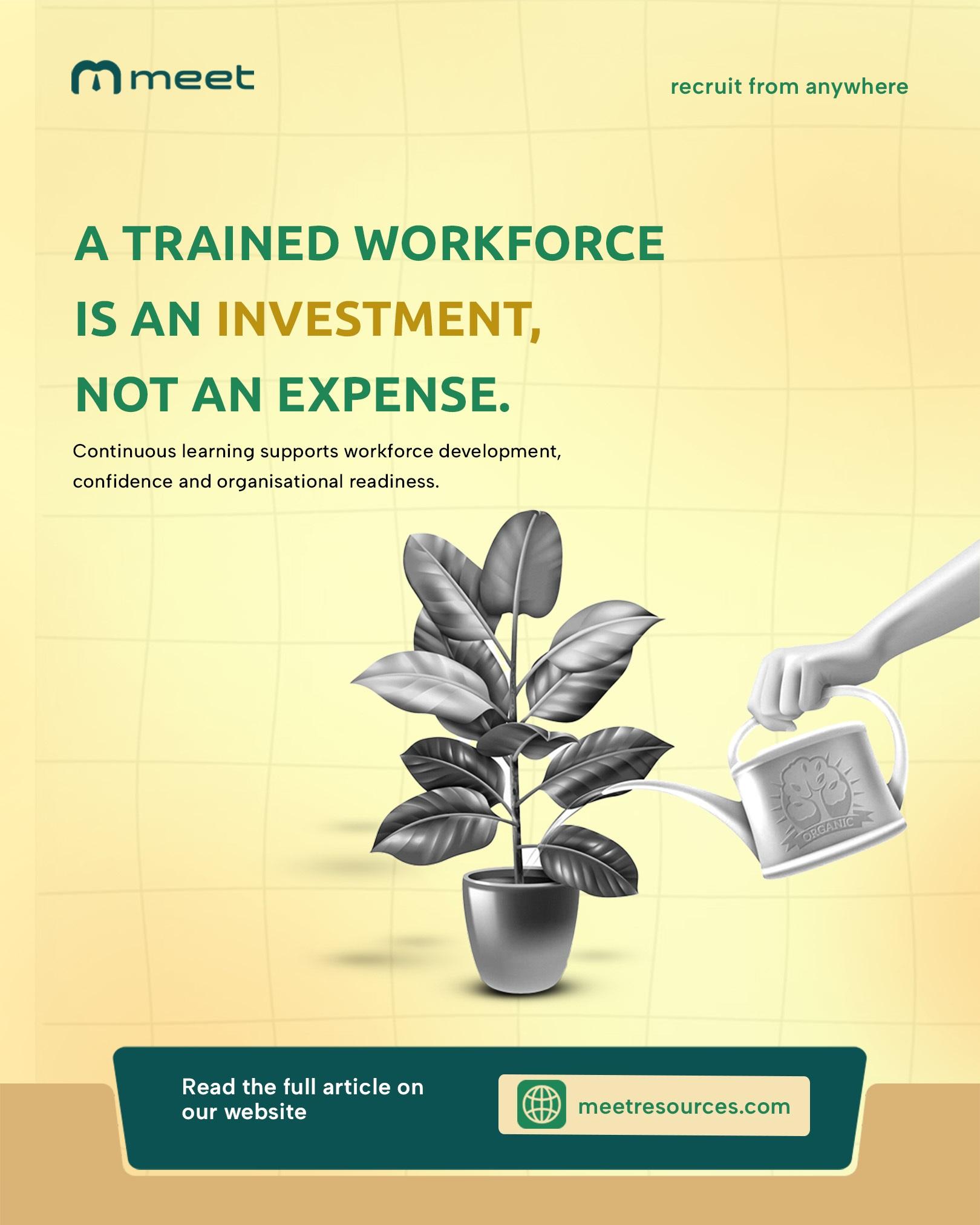
At Meet Resources, we believe workforce readiness grows stronger when learning continues beyond the first day of an assignment. By making development an ongoing part of the staffing process, organisations help workers build the knowledge, confidence and capabilities they need to succeed. A trained workforce is an investment, not an expense, and a workforce that keeps learning is better prepared to keep moving forward.
Explore how Meet Resources supports agencies and hirers, and read more about keeping workforce training up to date.
This article provides general information, not legal advice. Organisations should check the requirements that apply to their roles, workplaces and jurisdiction.
References and Further Reading
- CIPD: Learning and development guide
- CIPD: Skills matching – using and deploying people's skills effectively
- CIPD: Methods of delivering learning interventions
- CIPD: Learning evaluation, impact and transfer
- Health and Safety Executive: What is competence?
- Health and Safety Executive: Information, instruction, training and supervision
- Health and Safety Executive: Roles of suppliers and end-user businesses
- CIPD: Resourcing and Talent Planning 2026